Health and Safety Policy for Removal Van Operations
 Our health and safety policy sets out how we protect staff, customers, property, and the public during every removal van assignment. Whether a team is carrying a single item or managing a full household relocation, safety remains the first priority. This policy applies to all work carried out by our removal van service, including loading, transit, unloading, and any associated handling tasks.
We are committed to maintaining a working environment where risks are identified early, controlled properly, and reviewed regularly. Our approach is practical and based on prevention: safer planning, careful handling, clear communication, and the consistent use of equipment. Every member of the moving team is expected to act responsibly, follow procedures, and look out for hazards before they become incidents.
 A safe removals van operation depends on preparation. Before any move begins, the team assesses the property, access routes, item sizes, weight distribution, parking conditions, and any likely obstructions. This helps reduce strain injuries, property damage, and accidents involving tools or vehicles. We expect all personnel to pause work if a task becomes unsafe and to seek support when conditions change.
Responsibilities and Working Standards
All employees, contractors, and supervisors share responsibility for safe practice. Management must provide suitable training, up-to-date procedures, and equipment that is maintained in good condition. Team members must use that training correctly, report defects promptly, and never improvise methods that increase risk. The aim is to keep each removal van job controlled, efficient, and safe from start to finish.
Vehicle safety is central to our standards. Every van is checked routinely for roadworthiness, tyre condition, mirrors, lights, load security, and cleanliness. Loads must be evenly distributed and secured to prevent movement during transit. Drivers are required to follow legal driving limits, avoid distractions, and adjust speed to road and weather conditions. Safe driving is an essential part of every removal vehicle operation.
 The middle of each move is often where fatigue and rushed decisions create the most risk. For that reason, we schedule breaks where necessary, encourage team communication, and ensure tasks are shared fairly. Lifting and carrying must be performed with correct posture, clear hand signals, and teamwork for awkward or heavy items. We prefer mechanical aids and protective equipment whenever they reduce strain or improve control.
Hazard Control and Safe Handling
Our risk controls cover common moving hazards such as slips, trips, falls, pinch points, unstable furniture, sharp edges, and poor lighting. Work areas should be kept as clear as possible, and walkways must remain accessible during loading and unloading. If weather conditions create extra risk, such as rain or ice, additional care is required and the work pace may be adjusted. Safety takes precedence over speed in every removals van task.
We also consider the condition of items being moved. Fragile goods, loose fittings, glass, and appliances require extra attention. Items with sharp parts or unusual weight distribution should be wrapped, labelled, and lifted only by trained staff. When necessary, the team uses gloves, safety footwear, straps, blankets, dollies, and other protective aids. The correct use of equipment helps prevent avoidable injuries and damage.
Fire safety, manual handling, and incident response are included in our routine checks. No vehicle should carry unsafe materials, blocked exits, or unsecured loads. Staff are trained to recognise warning signs such as overheating equipment, fuel leaks, unstable stacking, or signs of overexertion. A safe removal van service depends on early action and prompt reporting, not on waiting until a minor issue becomes serious.
Training, Reporting, and Review
Training is provided to ensure that all workers understand safe lifting techniques, vehicle checks, route planning, customer-site awareness, and emergency procedures. Refresher training is used where required, especially after policy updates or when new equipment is introduced. Supervisors monitor compliance and provide guidance if standards are not being followed. Good training supports safer removals vehicle operations and greater confidence on site.
Accidents, near misses, and equipment faults must be reported as soon as possible. Every report is reviewed to identify root causes and to prevent repetition. We treat near misses seriously because they show where controls may need improvement. If an incident affects a customer property, the vehicle, or a member of the public, work is paused until the area has been made safe and the issue properly assessed.
 This policy is reviewed regularly to make sure it remains effective, practical, and aligned with current working conditions. Updates may be made after changes in operations, equipment, legislation, or lessons learned from incidents. A removal van policy works best when everyone understands it, applies it consistently, and supports a culture of shared responsibility.
Commitment to Safe and Professional Service
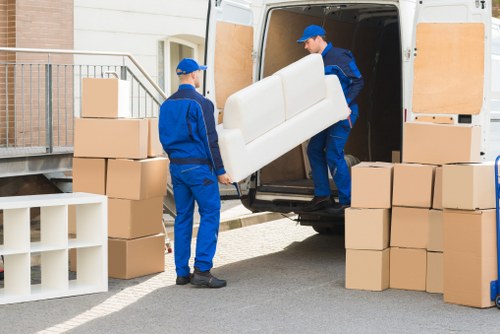 Our overall commitment is simple: every move should be completed with care, professionalism, and respect for the safety of all involved. By using sound procedures, suitable equipment, and clear communication, we reduce risk and protect the people, vehicles, and belongings entrusted to us. Safety is not an extra step; it is part of how every removal van service is delivered.
We expect all staff to follow this policy at all times. Compliance helps ensure that each job is carried out responsibly and that standards remain consistent across every assignment. Through awareness, planning, and continuous improvement, our removals van operations remain safe, reliable, and professionally managed.